Science Quiz: Space Astronomy | 20 Questions with Answers!
Science Quiz: 20 Space and Astronomy Questions! FREE USA facts quiz: 8 planets, Sun closest star, Neil Armstrong Moon, Jupiter largest, Moon phases orbit, 12 Moon walkers, Milky Way galaxy, ISS 250 miles, light 186K mi/sec, Saturn rings. Perfect USA classrooms, homeschool science, STEM clubs! Average score 14/20—ace this Science Quiz NOW!
Science Quiz: 20 Space and Astronomy Questions
1. How many planets in our Solar System?
A) 7
B) 8
C) 9
D) 10
Answer: B) 8
Explanation: Mercury, Venus, Earth, Mars, Jupiter, Saturn, Uranus, Neptune. Pluto demoted to dwarf planet 2006. Kids still love Pluto though!
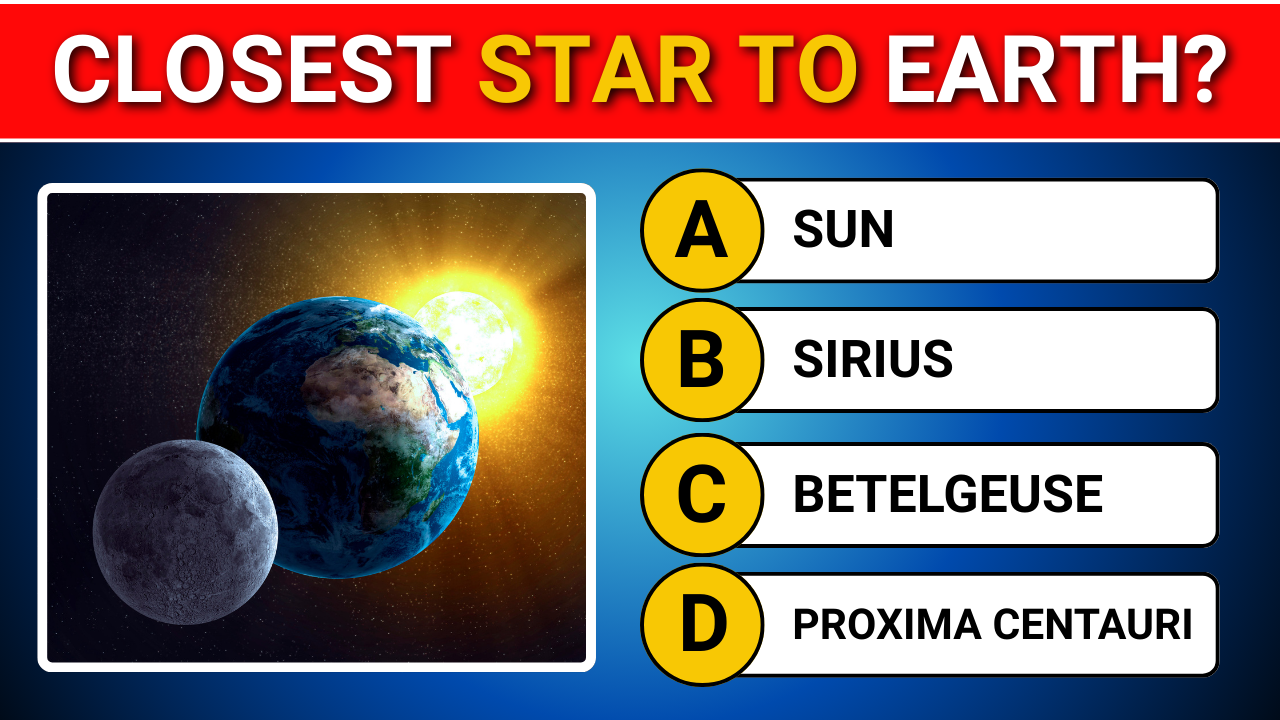
2. Closest star to Earth?
A) Proxima Centauri
B) Sun
C) Sirius
D) Betelgeuse
Answer: B) Sun
Explanation: Sun is closest star, 93 million miles away. Powers life, massive fusion reactor. Other stars light-years distant!
3. First man on Moon?
A) Buzz Aldrin
B) Neil Armstrong
C) John Glenn
D) Yuri Gagarin
Answer: B) Neil Armstrong
Explanation: July 20, 1969 Apollo 11 “one small step”. Buzz Aldrin second. 600M watched live TV history moment!
4. Largest planet Solar System?
A) Earth
B) Saturn
C) Jupiter
D) Neptune
Answer: C) Jupiter
Explanation: Jupiter gas giant 11x Earth diameter. Great Red Spot storm bigger than Earth raging 400+ years. King planet!
5. What causes phases Moon?
A) Earth’s shadow
B) Moon orbit Earth
C) Sun rotation
D) Clouds
Answer: B) Moon orbit Earth
Explanation: Sun lights half Moon always. Earth position shows different portions. Full Moon opposite Sun, New Moon same side.
6. How many astronauts walked Moon?
A) 8
B) 12
C) 16
D) 24
Answer: B) 12
Explanation: Apollo 11-17 missions 1969-1972. Last Alan Shepard golfed on Moon! Artemis plans return soon.
7. What galaxy contains Earth?
A) Andromeda
B) Milky Way
C) Triangulum
D) Magellanic
Answer: B) Milky Way
Explanation: Spiral galaxy 100K light-years wide, 400B stars. Sun 26K light-years from center. Home galaxy!
8. International Space Station orbits how high?
A) 100 miles
B) 250 miles
C) 500 miles
D) 1000 miles
Answer: B) 250 miles
Explanation: Low Earth Orbit 250 miles up. Visible naked eye night sky. Astronauts see 16 sunrises daily!
9. Speed light vacuum?
A) 186,000 mph
B) 186,000 miles/sec
C) 1M miles/sec
D) Infinite
Answer: B) 186,000 miles/sec
Explanation: Fastest speed universe. Light-year = distance travels one year. 5.9 trillion miles! Cosmic speed limit.
10. Rings around which planet most famous?
A) Jupiter
B) Uranus
C) Saturn
D) Neptune
Answer: C) Saturn
Explanation: Ice/rock particles thousands rings. Visible small telescopes. Cassini probe amazing ring photos!
11. First artificial satellite launched?
A) Sputnik 1
B) Voyager 1
C) Apollo 11
D) Hubble
Answer: A) Sputnik 1
Explanation: Oct 4, 1957 Soviet Union beeped 98 min orbit. Started Space Race panic USA. Tiny basketball size!
12. How many moons does Earth have?
A) 1
B) 2
C) 3
D) 0
Answer: A) 1
Explanation: Moon only natural satellite. Tides, eclipses, werewolf legends. 238,855 miles average distance.
13. What telescope orbits Earth?
A) Keck
B) Hubble
C) Arecibo
D) JWST
Answer: B) Hubble
Explanation: Launched 1990 above atmosphere crystal-clear deep space photos. 30+ years service billions galaxies imaged!
14. Diameter Sun compared Earth?
A) 10x
B) 109x
C) 1000x
D) Same
Answer: B) 109x
Explanation: Sun 864,000 miles diameter vs Earth 7917 miles. 1M Earths fit inside Sun volume. Massive star!
15. Space Age began when?
A) 1945
B) 1957
C) 1961
D) 1969
Answer: B) 1957
Explanation: Sputnik 1 launch marked Space Age. Cold War space competition USA vs USSR launched.
16. Which planet spins backwards?
A) Mars
B) Venus
C) Jupiter
D) Mercury
Answer: B) Venus
Explanation: Venus retrograde rotation opposite other planets. Day longer than year! Hottest planet 900°F.
17. First woman space?
A) Sally Ride
B) Valentina Tereshkova
C) Eileen Collins
D) Peggy Whitson
Answer: B) Valentina Tereshkova
Explanation: June 1963 Soviet cosmonaut orbited Earth 48 times 71 hours. Pioneered women space travel!
18. What black holes center?
A) Dense stars
B) Singularity
C) Dark matter
D) Gas clouds
Answer: B) Singularity
Explanation: Infinite density point escape velocity exceeds light speed. Event horizon no return point. Mysterious monsters!
19. Nearest star system after Sun?
A) Sirius
B) Alpha Centauri
C) Vega
D) Polaris
Answer: B) Alpha Centauri
Explanation: Proxima Centauri closest single star 4.24 light-years. Three-star system. Travel time thousands years!
20. What powers stars like Sun?
A) Burning coal
B) Nuclear fusion
C) Gravity collapse
D) Dark energy
Answer: B) Nuclear fusion
Explanation: Hydrogen atoms fuse helium releasing massive energy. Sun fuses 620M tons hydrogen/second! Star power source.
More Quizzes –
| Science Quiz | Click Here |
| General Knowledge Quiz | Click Here |
| Geography Quiz | Click Here |
| History Quiz | Click Here |
| Trivia Quiz | Click Here |